
How to Pass Your ABRSM Piano Exam!
Here is my top 10 of ‘How to Pass Your ABRSM Exam’!
1) Are you ready for exam entry?

I would say that the first and most important thing to consider to ensure you pass your ABRSM exam starts before you are even entered! Before I make the decision to enter a student for an exam, I always consider the following questions:
– SCALES AND ARPEGGIOS: Can you play all (or nearly all) scales and arpeggios without your book?
– PIECES: Can you play all three pieces fairly fluently?
– SIGHT READING: Choose a test from your sight reading book – can you find your starting positions, adjust fingers for accidentals and play each hand through within 30 seconds?
– AURAL TESTS: Have you been using the online aural tests site to improve your aural test understanding? If not, CLICK HERE and subscribe!
If the answers to these four questions are ‘yes‘ then you are ready to be entered for your exam! These will help you to pass your ABRSM exam!
2) What happens at an exam?
Exams can be daunting for many people so I have created an in depth description of what happens on the exam day from start to finish. I talk this through a lot with students who have never taken an exam. This helps them to imagine what it will be like on the day and to decide if it’s something they would like to do. You need to know everything you can find out about the exams, what they entail and what the exam day will be like. CLICK HERE to find out all about it! Some students even go to find the exam centre prior to the exam day so they don’t have the added stress of trying to follow directions whilst feeling nervous. This means you can remain calm which will help you to focus and pass your ABRSM Exam.
3) Time Management
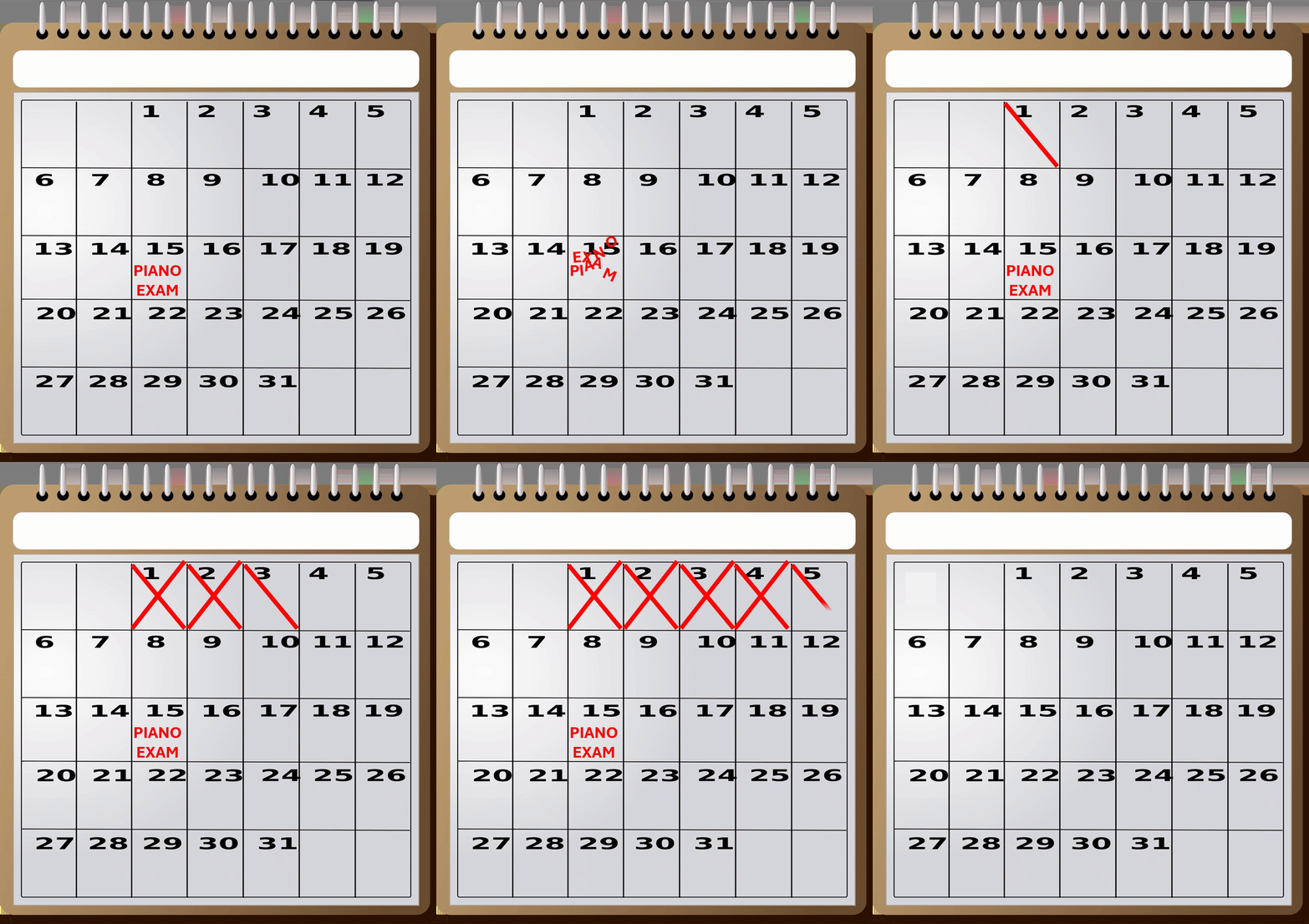
I can appreciate that 10 weeks seems such a long way away but believe me, in terms of preparing for an exam, it is no time at all. They will fly by! Those 10 weeks are for making sure students:
– have included every detail shown in the music in the performance of the three pieces and that they can be played fluently without slips, hesitations or stops.
– can play scales promptly and fluently without slips, hesitations or stops.
– know what questions will be asked in the aural tests, and how to answer them.
– understand how to approach the sight reading tests.
4) Sight Reading Practice
You will have already purchased the sight reading book using THIS LINK. I recommend completing one sight reading exercise, from the book, every time you practice. The book gives around 50 examples of short extracts of music, similar to those you will be given in your exam. The extract becomes longer as grades increase. For grade 1, the extract will be played hands separately. For grades 2 and above, the extract is played hands together.
In the exam, you will have just 30 seconds to prepare the piece. During those 30 seconds, you need to find your starting notes, identify the key signature and any additional sharps or flats and have a play through as much of the music as time allows. You then need to perform the piece to the examiner as if it was a piece you have been practising at home for months. You will be marked on accuracy of notes and rhythms but also on fluency, suitability of tempo and on the inclusion of dynamics and articulation.
Don’t forget to download the ‘Complete Music Reading Trainer’ app too! The app will give you lots of chances to recognise notes in the quickest time possible.
Sight reading is worth 21 marks in the exam and it is vital that you achieve highly in this component to give a better chance to pass your ABRSM exam.
5) Proper Practice at Home!

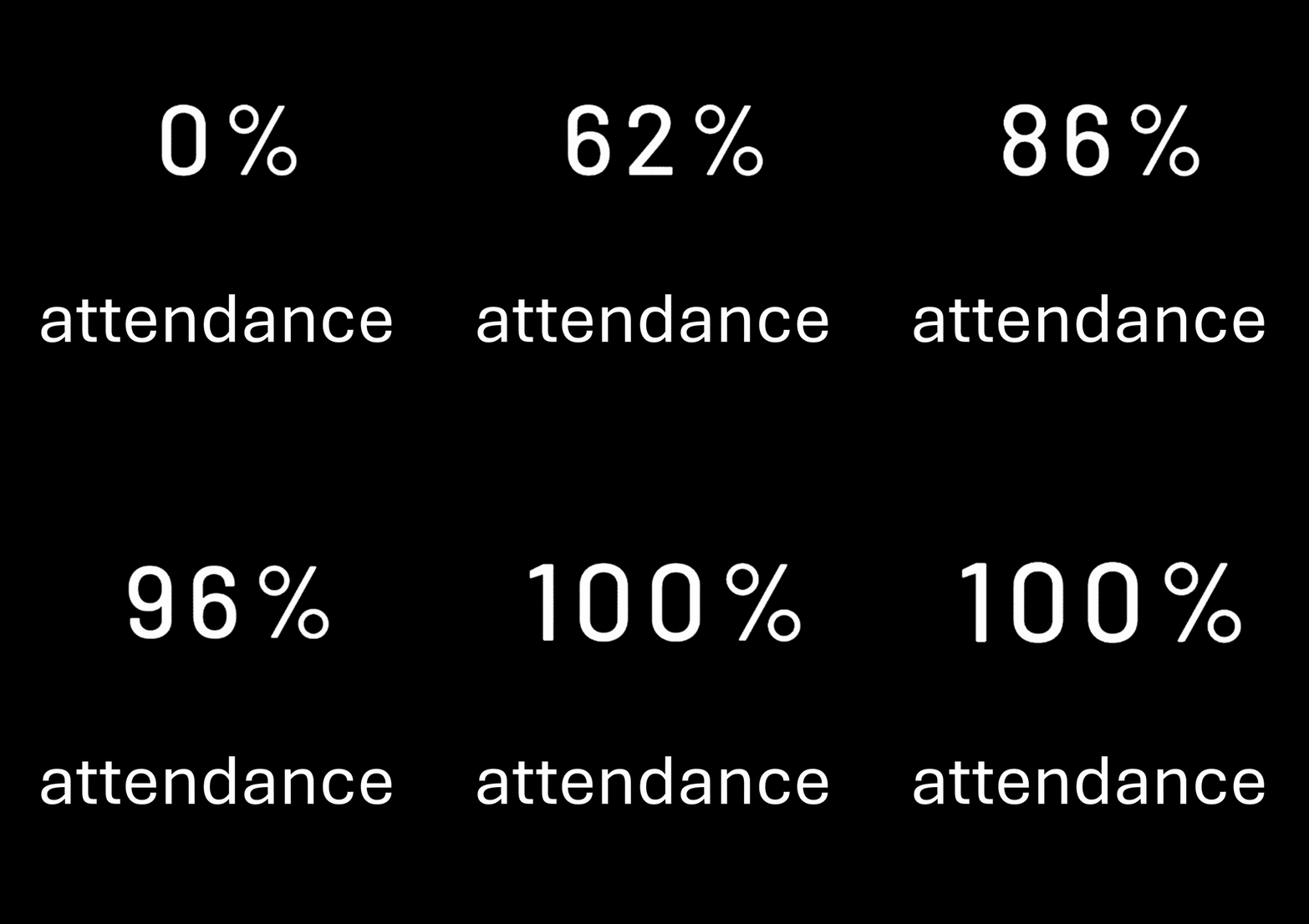
6) Attendance at Lessons
7) Ask someone to test you on your scales

Remember, this is what examiners are looking for when you play your scales in your exam:
– fluent and rhythmic: they should not hesitate, stutter or stop and notes should be even
– confident: they should be able to play them promptly when asked to by the examiner
8) Enjoy a mini concert of pieces!
PITCH:
– Highly accurate notes
TIME:
– Fluent, with flexibility where appropriate
– Rhythmic character well conveyed
TONE:
– Well projected
– Sensitive use of tonal qualities
SHAPE:
– Expressive
– Idiomatic musical shaping and detail
PERFORMANCE:
– Assured
– Fully committed
– Vivid communication of character and style
How many of these targets can you meet when you perform in front of family and friends?
9) Mock Exams!
One thing which I warn my students about is the silence that will occur in between pieces and in between components of the exam. I do a lot of talking in lessons and I warn my students that it won’t be like that in their exam. The examiner will welcome them into the room and likely just say ‘thank you’ after they have performed an element of their exam. I do mock exams with my students which help them to see just how their real exam will be structured. I include the silences so they become used to that environment. My students have commented about how helpful the mock exams are for giving an approximate mark at which they are currently working (using the ABRSM marking criteria which your can view if you CLICK HERE but also for the speed at which the exam will be run, the order of the different components and the quiet setting that will take place.
10) Keep calm!

Try to stay as relaxed as possible on the run up to the exam. It can be easier said than done as an adult, but keeping a child calm is a whole different story! As a parent of a child who takes music exams, I know exactly what it’s like. You ask your child to practice and they say ‘I’ll do it later’! If you have a child (like mine) that needs to be reminded to practice, please keep reminding them! Please don’t give up! It’s tiring as a parent to have to keep doing this but it is unlikely your child will change the habit of a lifetime just because they have been entered for an exam. Keep reminding yourself how beneficial learning an instrument is to your child and that bit of nagging that we have to do is for a good reason.
Establishing a regular practice routine is essential. My child sometimes struggles to fit in any practice with the amount of homework they have, but somehow we manage. Different children will have different amounts of time they can devote to practice, and that’s ok. If this is the case, try to identify 3 days a week when your child can practice. It helps if they are the same days every week, so your child can get into a good routine which leads to less nagging by us parents! Most children will not be ready for their exam without their parent’s support so please bear this in mind when deciding to enter your child for their exam. It really is a team effort between parents, teacher and child.
On the day of the exam, you or your child will be nervous. If it is your first exam, part of this is the fear of the unknown. Being nervous is completely normal. Make sure you give yourself plenty of time to arrive, allowing for traffic. You should arrive at least 15 minutes before the exam to allow for a quick warm up before going into the exam room. Arriving early will also mean you or your child can become accustomed to the environment and make yourselves comfortable. Some of my students even take a trip to find the location of the exam venue before the date of their exam. Again, this helps to keep everyone calm as you will be familiar with your surroundings and of course, you won’t get lost on the way!
If you are one of my students, CLICK HERE for the directions to the Chester and Liverpool exam centres.
And one last message!